Fiberglass Pools for Northern Virginia Backyards
A one-piece engineered shell, installed in about 2 to 3 weeks, built to handle Virginia winters without cracking. Here's how fiberglass compares and what the process looks like from design to first swim.
What a Fiberglass Pool Actually Is
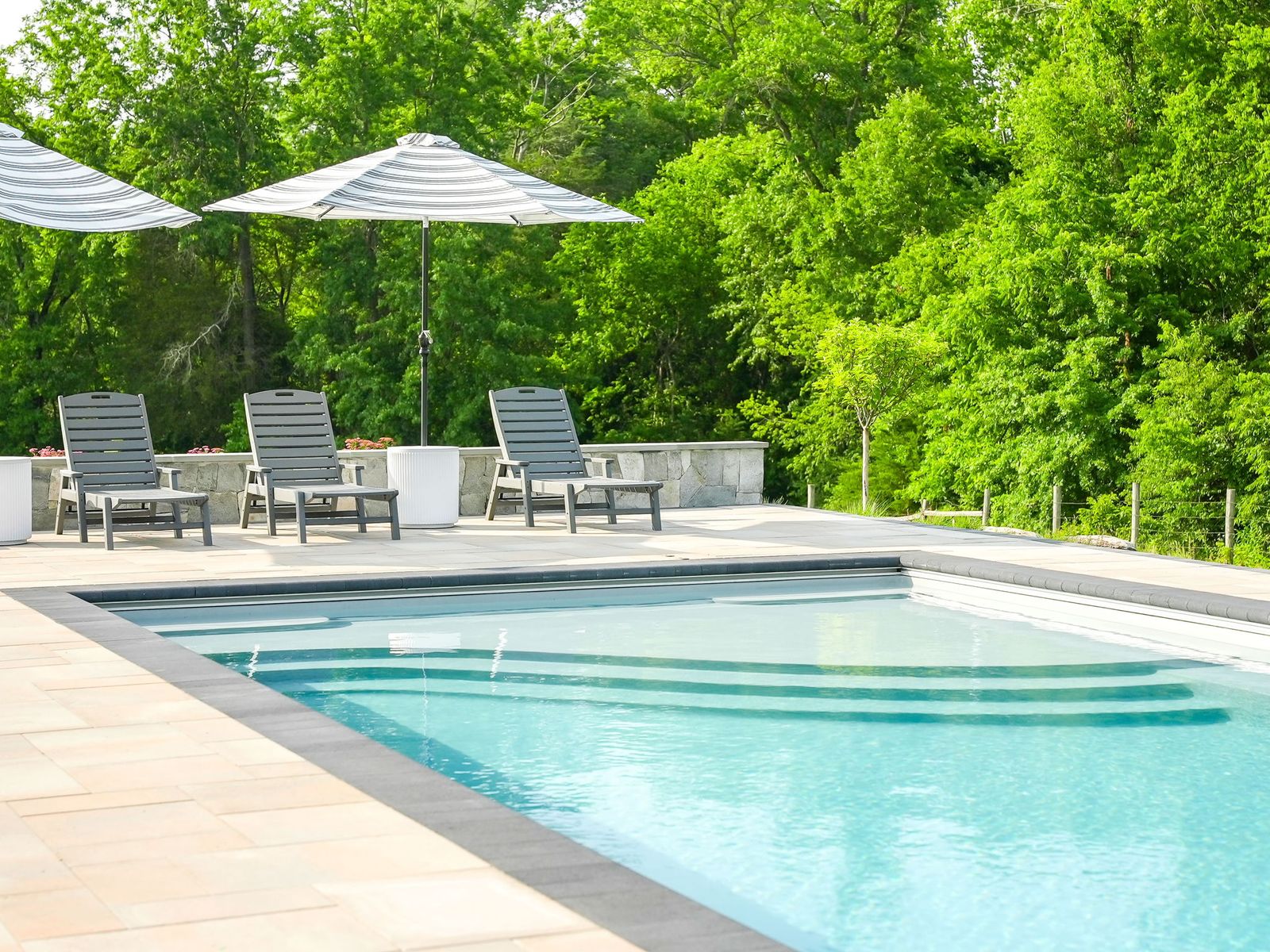
A fiberglass pool starts as a single molded shell, built off-site in a factory and shipped to your property in one piece. The shell is layered fiberglass and resin, finished with a smooth gel coat that seals the surface and gives it color.
That's different from a gunite pool, which is sprayed and formed on your property over several months, or a vinyl liner pool, which needs a new liner every 7 to 10 years. With fiberglass, the shape, depth, and finish are set before the truck arrives.
The gel coat surface is non-porous. Algae has a harder time taking hold, and the surface stays smoother underfoot than plaster or aggregate finishes.
Why Fiberglass Fits Northern Virginia
Fairfax, Loudoun, Prince William, and Fauquier Counties all see real freeze-thaw cycles every winter. Water gets into small cracks, freezes, expands, and widens the crack. Gunite is porous by nature, so this is a slow, ongoing maintenance problem. Fiberglass shells flex slightly instead of cracking, which holds up better through a Virginia winter.
Fiberglass is also a natural insulator. The shell holds heat better than concrete, so a fiberglass pool generally costs less to heat across a swim season that runs roughly April through September here. For homeowners running a heater to extend the season, that's a real, ongoing cost difference.
For the full side-by-side on cost, timeline, and upkeep, see our fiberglass vs. gunite vs. vinyl comparison.
Ready for real numbers on your pool?
Free consultation, honest pricing, and a realistic timeline from Outdoor Solutions — the licensed Class A team that will actually build it.
Install Timeline: Weeks, Not Months
Once the shell arrives and the hole is excavated, a fiberglass pool typically goes from set to backfilled and plumbed in about 2 to 3 weeks. Gunite pools take 3 to 6 months on-site, since excavation, steel, spray, curing, tile, and plaster all happen in sequence with cure time between steps.
That speed matters most for anyone targeting a specific swim season. Permitting and design still take time before excavation starts, so the fast shell install doesn't shorten the whole timeline, but it does mean far less of your yard is torn up for far less time once work begins.
Most Northern Virginia homeowners who want to swim by summer sign a contract in January or February of that year. See what a fiberglass pool costs in Northern Virginia for budget planning before you get to that stage.
Shapes, Sizes, and Features
Fiberglass shells come pre-molded in a range of shapes and sizes, so you're choosing from an existing catalog rather than designing a pour from scratch. Common options include:
- Rectangular pools with clean, formal lines
- Freeform shapes with curved edges for a more natural look
- Built-in tanning ledges for lounge chairs in a few inches of water
- Built-in bench seating along one or more walls
- Multiple depth zones, from a shallow entry to a deeper swim end
- Powered automatic safety covers, which meet Virginia's barrier code in place of a fence and hold heat between swims
Because the shell is pre-engineered, the shape you see in the plan is the shape you get. There's no waiting to find out how the concrete cured or whether the plaster finish came out even.
Maintenance and Lifespan
The 10-year cost of owning a fiberglass pool is where it separates from the alternatives. Plan on roughly $3,000 to $5,000 in upkeep over a decade, mostly routine equipment and water chemistry.
Compare that to a gunite pool, which needs replastering every 8 to 12 years at $30,000 and up each time, depending on pool size, pushing 10-year upkeep past $30,000. Vinyl liner pools need a full liner replacement every 7 to 10 years.
The gel coat's non-porous surface is also why fiberglass pools tend to need less chemical to keep the water balanced. Algae has fewer places to grab onto, and the finish doesn't stain the way plaster can.
How the Install Process Works
Every fiberglass pool project in Fairfax, Loudoun, Prince William, or Fauquier County follows roughly the same sequence, though paperwork varies by county.
Design and permitting. Your layout, shape, and site plan get finalized, then submitted for permit review. All four counties require a permit for any pool over 150 square feet, holding more than 5,000 gallons, or deeper than 24 inches, along with a code-compliant safety barrier per the 2021 ISPSC: a 48-inch fence, or a powered automatic safety cover complying with ASTM F1346 for homeowners who prefer no fencing (Outdoor Solutions installs both). Specifics differ by county: see the Fairfax County permit process, Loudoun County's permit guide, Prince William's permit requirements, and Fauquier County's permit guide. If you're in an HOA — Fairfax County alone has more than 1,500 associations — budget time for architectural review approval too.
Excavation and shell set. Once permits clear, the hole is dug to spec and the pre-built shell is set in place, leveled, and braced.
Plumbing and backfill. Pipes are connected, the shell is backfilled, and the equipment pad goes in.
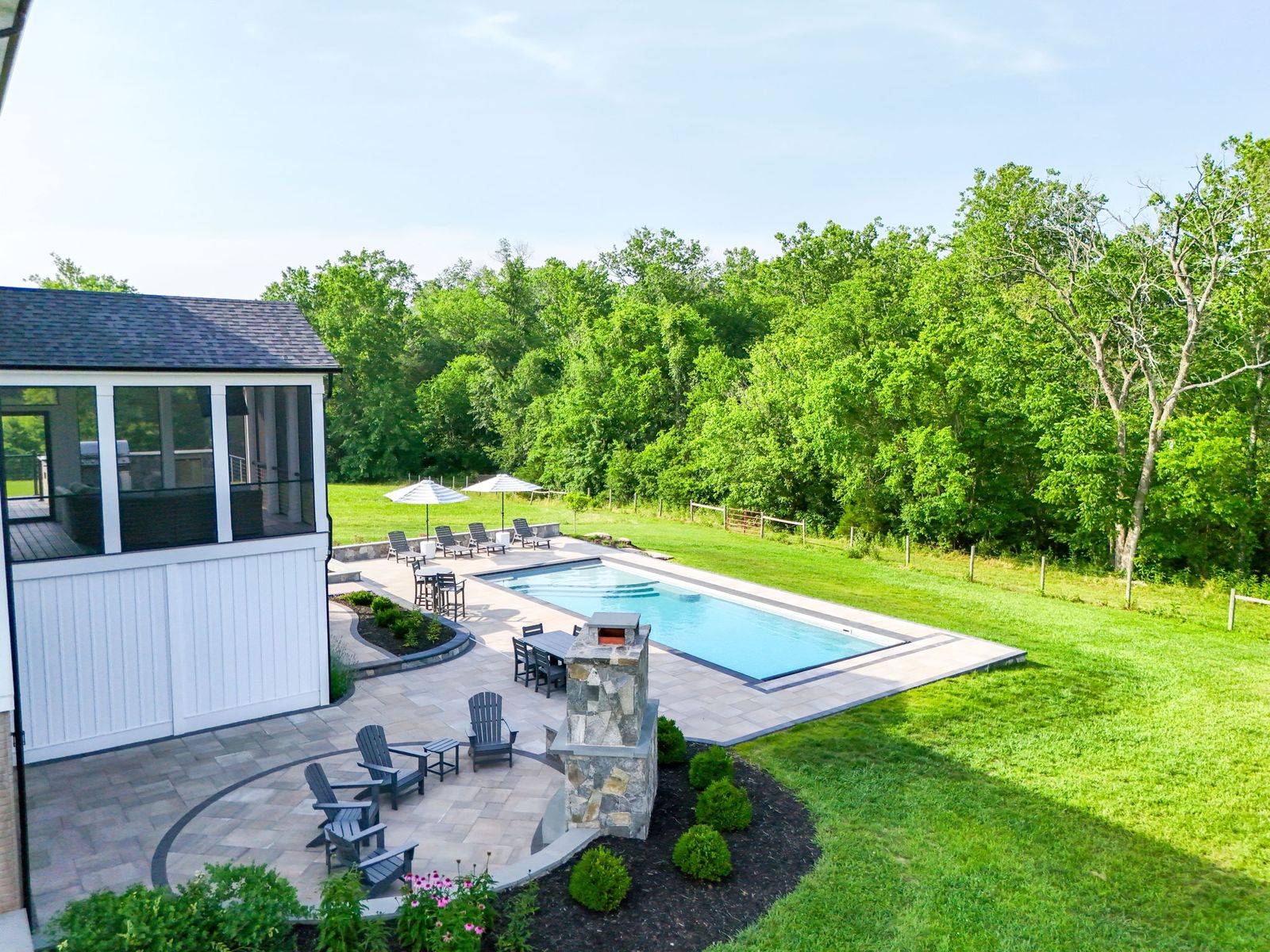
Decking and finishing. Coping, decking, and any surrounding hardscape get built out. This is also where homeowners often expand into a full backyard build.
Startup. Water goes in, equipment gets balanced and tested, and you swim.
This last stage is where Outdoor Solutions separates from most pool companies in Northern Virginia. A typical pool installer finishes the shell and plumbing and leaves the patio, retaining walls, and landscaping for you to contract separately. Because Outdoor Solutions is a licensed Class A design-build contractor, the complete package — pool, hardscape, pavilion, outdoor kitchen, landscaping — gets designed, priced, and built under one contract with one crew. See pool and patio bundled projects for how that works.
Ready for real numbers on your pool?
Free consultation, honest pricing, and a realistic timeline from Outdoor Solutions — the licensed Class A team that will actually build it.
The builder, the warranty, and what we don’t install
Every pool project referred through this site is built by Outdoor Solutions, an independent Thursday Pools dealer and VA Class A contractor (License No. 27-05134656). The shell carries Thursday Pools’ one-time transferable limited lifetime structural warranty plus a 15-year surface warranty against osmotic blistering — and because the structural warranty transfers once, it can follow the house to its next owner. Outdoor Solutions backs the hardscape and masonry it builds around the pool with a 3-year workmanship warranty covering settlement and separation. Pumps, heaters, and other equipment carry their own manufacturers’ warranties.
Two things worth knowing before you request a quote. First, Outdoor Solutions installs fiberglass pools only — no above-ground pools, no vinyl or liner pools (and no liner replacements), and no gunite. Second, an inground fiberglass project realistically starts around $80,000 installed in Northern Virginia, with most mid-range projects landing between $120,000 and $175,000 — a recent Outdoor Solutions pool with a simple walkway around it in Warrenton closed right around $100,000. Consultations are free, and the crew typically books new builds about a month out. If the budget fits better with a patio or outdoor-living project first, Outdoor Solutions takes on those at any size — see pool and patio projects.
Frequently Asked Questions
How long does a fiberglass pool take to install?
Once excavation starts, the shell itself is typically set, plumbed, and backfilled in about 2 to 3 weeks. Total project time from signed contract to first swim is longer once you factor in design, permitting, and decking, generally a few months depending on the county and time of year.
Do fiberglass pools crack in Virginia winters?
Fiberglass shells flex slightly instead of cracking the way porous gunite can during freeze-thaw cycles. That flexibility is one of the main reasons fiberglass holds up well through a Northern Virginia winter with minimal structural maintenance.
How much does a fiberglass pool cost in Northern Virginia?
Installed fiberglass pool projects in Fairfax, Loudoun, Prince William, and Fauquier Counties start around $80,000 for the pool with a basic surround, land between $120,000 and $175,000 for most mid-range patio-and-decking packages, and run to $185,000+ with full outdoor-living builds. See our Northern Virginia pool cost guide for a full breakdown built on real project numbers.
What warranty comes with a fiberglass pool?
The Thursday Pools shell carries a one-time transferable limited lifetime structural warranty plus a 15-year surface warranty against osmotic blistering. Outdoor Solutions warranties its own hardscape and masonry workmanship around the pool for 3 years. Pumps, heaters, and other equipment are covered by each manufacturer's own warranty.
What size and shape options are available?
Fiberglass shells come pre-molded in a range of rectangular and freeform shapes, with options like built-in tanning ledges, bench seating, and multiple depth zones. Because the shell is pre-engineered, you can see the exact final shape before excavation ever starts.
How does fiberglass compare to gunite and vinyl liner pools?
Fiberglass installs faster (2 to 3 weeks vs. 3 to 6 months for gunite), costs less to maintain over 10 years than either gunite or vinyl, and doesn't need replastering or liner replacement. Gunite offers more custom shape flexibility for very large or unusual pools. See our full fiberglass vs. gunite vs. vinyl comparison.
Do I still need a permit for a fiberglass pool?
Yes. All four counties require a permit for pools over 150 square feet, over 5,000 gallons, or deeper than 24 inches, regardless of pool type. Fiberglass does simplify the paperwork in some counties, Fauquier, for example, allows a manufacturer's engineered install guide instead of the engineer-sealed plans gunite pools require. See our Fairfax County permit guide, Loudoun County permit guide, Prince William permit guide, and Fauquier permit guide.
Can I combine a fiberglass pool with a patio or outdoor kitchen?
Yes. Outdoor Solutions is a full design-build contractor handling hardscape and landscape work alongside pool construction, so a pool, patio, and outdoor kitchen can be designed and built as one coordinated project. Learn more on our pool and patio page.
When should I start the process to swim next summer?
Most Northern Virginia homeowners who want to swim by summer sign a contract in January or February, which allows time for design, permitting, and construction ahead of the April through September swim season. Reach out through our contact page to start the conversation early.
Get a Pool Quote
Tell us about your yard and we'll follow up with honest numbers and a realistic timeline. No pressure, no spam — just a straight answer from the team that will actually build it.
Prefer to talk? Call (571) 548-3785